

Neurodivergent Professionals: Workplace Misattunement, and the Cost of Conditional Belonging

Updated: Sep 2


Sometimes, professional growth has been framed as becoming more resilient inside systems that keep asking too much.
This program was created for neurodivergent professionals seeking supervision, reflective practice, and professional development that honours identity, capacity, sustainability, relationships, systems change, and meaningful impact.
Together, we explore how to move from self-doubt and burnout toward a more grounded relationship with your work — one shaped by neuroaffirming practice, sustainable energy, authentic connection, and values-led contribution.
What the program explores
Neurodivergent identity and self-understanding
Regulation, energy, and sustainable practice
Communication, boundaries, and authentic relationships
Environments, systems, and accommodations
Meaning, creativity, and systemic impact
Ways to engage
Self-Paced: Includes 6 online modules, downloadable worksheets, reflection tools, webinar recordings, and 12 months of access. This option may suit those wanting to move through the program in their own time, with spaciousness and flexibility.
Guided: Includes everything in the self-paced option, plus live group sessions, live webinars, and an online community for deeper reflection, connection, and integration.
This program may resonate with neurodivergent therapists, social workers, allied health professionals, supervisors, educators, advocates, and practitioners seeking neuroaffirming supervision, burnout-aware professional support, sustainable careers, and values-led practice.
Introduction
Many neurodivergent professionals describe the same quiet experience at work…something feels consistently off. Meetings are draining in ways that are hard to explain. Feedback lands with disproportionate weight. Communication feels effortful, even when intentions are good. Over time, energy dwindles, confidence erodes, and burnout begins to loom, not as a sudden collapse, but as a slow wearing away.
These experiences are often framed as individual struggles: difficulty communicating, managing emotions, coping with feedback, or maintaining professional boundaries. Neurodivergent professionals are encouraged to develop better strategies, increase resilience, or learn to “self-advocate” more effectively. While these skills can be useful, they rarely address the deeper issue. What is missing from many workplace conversations is an examination of how connection itself is structured and who is expected to do the work of maintaining it.
This article invites a shift in perspective. Rather than locating distress within neurodivergent individuals, it explores how workplace cultures, team dynamics, and professional norms often create conditional belonging and uneven relational labour. It suggests that many communication breakdowns are not failures of skill or intention, but signs of misattunement across difference, where one person is implicitly expected to span the entire distance.
Workplaces Are Not Neutral Containers
Workplaces are often described as rational, objective environments governed by shared standards of professionalism. In practice, however, they are cultural ecosystems shaped by unspoken norms about communication, emotion, pace, productivity, and belonging. These norms tend to reflect neuronormative assumptions: preferences for quick verbal processing, emotional moderation, eye contact, linear thinking, and sustained availability (Walker, 2021).

For neurodivergent professionals, these expectations can create a persistent sense of misfit. Not because they lack competence, but because their ways of thinking, communicating, and regulating do not align neatly with dominant norms. Research consistently shows that neurodivergent workers experience higher rates of misunderstanding, exclusion, and burnout, even in roles where they perform well (Raymaker et al., 2023; Szechy et al., 2024).
Importantly, these dynamics do not arise from malice. Many teams genuinely value diversity and inclusion. Yet inclusion is often offered conditionally: difference is welcomed so long as it does not require others to change. When accommodation is framed as an exception rather than a shared responsibility, neurodivergent workers are subtly asked to absorb the cost of belonging.
The Invisible Labour of Spanning the Distance
In everyday workplace interactions, communication is frequently treated as a neutral exchange of information. In reality, it is a form of relational labour, work that requires energy, interpretation, and adjustment. For neurodivergent professionals, this labour often includes:
Masking natural communication styles to appear engaged
Monitoring tone, facial expression, and body language
Suppressing sensory or emotional needs
Anticipating how others might interpret their words or reactions
This labour is largely invisible, yet it is cumulative. Pryke-Hobbes et al. (2023) describe masking as a pervasive workplace strategy that carries significant cognitive and emotional cost. Over time, the effort of constantly adapting can lead to exhaustion, loss of self-trust, and disconnection from one’s own needs.
Crucially, this labour is rarely distributed evenly. In most professional settings, neurodivergent people are expected to do more adapting, more explaining, and more smoothing over of discomfort. When misunderstandings arise, the burden of repair often falls to them as well. The result is not just fatigue, but a gradual internalisation of the belief that connection is something they must earn.
Misattunement, Not Deficit
The Double Empathy Problem offers a helpful lens for understanding these dynamics. Rather than framing communication difficulties as deficits within neurodivergent individuals, it highlights how misunderstandings arise between people with different neurotypes, each operating with their own norms and expectations (Milton, 2014). Importantly, the consequences of misattunement are not distributed equally. Power shapes whose discomfort is prioritised and whose is minimised.
In workplace teams, this often means that neurodivergent expressions of uncertainty, intensity, silence, or overwhelm are interpreted as problems to be corrected. Meanwhile, dominant communication styles are treated as neutral or professional. Over time, this creates a relational pattern in which one person is expected to stretch continuously across difference, while others remain largely unchanged.
Seen through this lens, many so-called “communication issues” are better understood as structural mismatches, not individual shortcomings. The problem is not that neurodivergent people cannot connect, but that connection has been designed in ways that require them to carry disproportionate relational weight.
Burnout as Structural Fatigue
Neurodivergent burnout is often discussed in terms of workload, stress, or poor self-care. While these factors matter, they do not tell the whole story. Research increasingly frames burnout as a response to chronic misattunement and lack of control, rather than simple overwork (Raymaker et al., 2023). When individuals are repeatedly required to override their needs, suppress their differences, and perform belonging, the nervous system pays the price.
Burnout rarely arrives suddenly. It accumulates through countless small moments: pushing through meetings when overwhelmed, softening feedback to avoid conflict, staying silent when something feels wrong, or recovering alone after relational strain. These moments ripple outward, affecting confidence, identity, relationships, and ethical clarity. Over time, what began as adaptability becomes depletion.
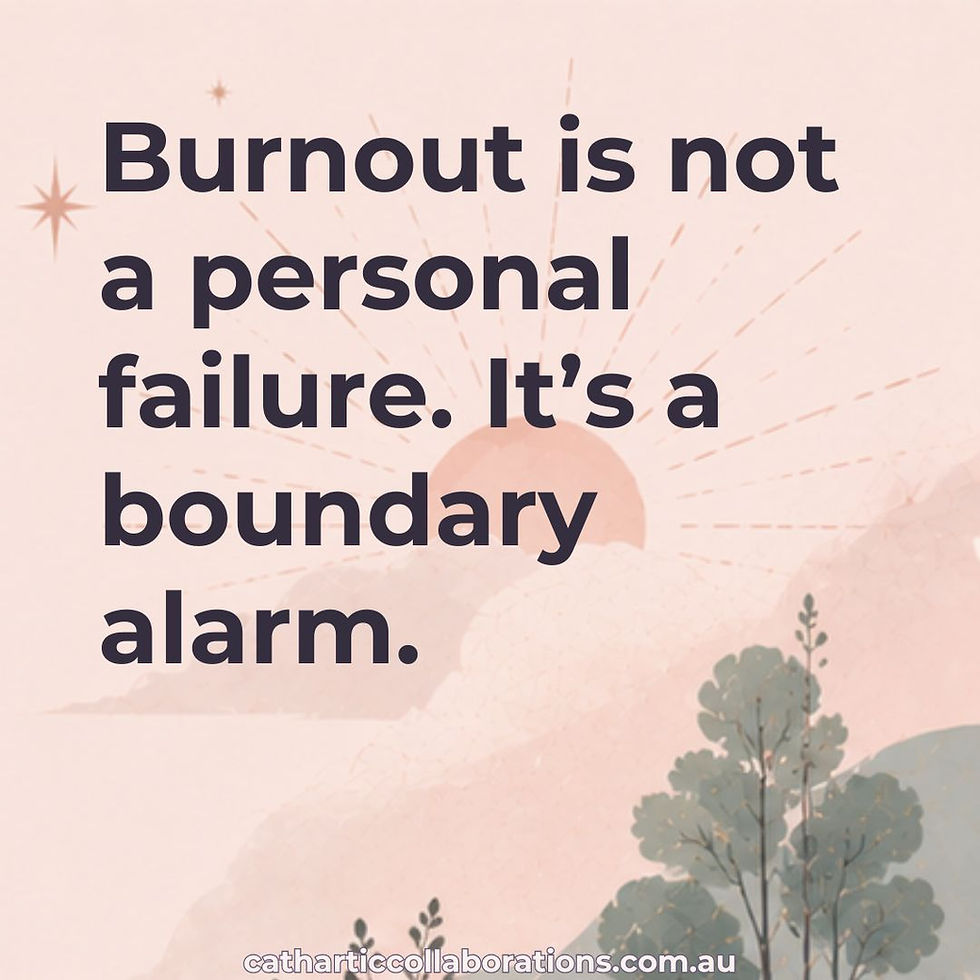
From this perspective, burnout is not a personal failure to cope. It is a signal that the relational and structural load has exceeded sustainable limits.
Boundaries, Pacing, and Repair as Structural Necessities
In many workplaces, boundaries are interpreted as interpersonal barriers — signs of rigidity, sensitivity, or disengagement. For neurodivergent professionals, however, boundaries are often essential structural supports. They are ways of regulating load, preserving energy, and maintaining integrity within environments that demand constant adaptation.
Similarly, pacing is frequently undervalued. Fast decision-making, rapid responses, and multitasking are often equated with competence. Yet for many neurodivergent people, slower processing and reflective pauses are not signs of disengagement but conditions for clarity and ethical action (Kersten et al., 2025).
When teams treat boundaries and pacing as individual preferences rather than shared responsibilities, they inadvertently reinforce uneven labour. Repair, too, becomes individualised. Neurodivergent workers are encouraged to develop better coping strategies, rather than workplaces examining how expectations might shift to reduce harm.
Lived Experience as Workplace Knowledge
Lived experience is increasingly recognised as a valuable source of insight in social work and allied professions (Mackay, 2023; Parsell et al., 2024). In workplaces, however, this recognition is often inconsistent. Neurodivergent professionals may be encouraged to bring their “whole selves” to work, yet penalised when their insights challenge existing norms.
When lived experience is welcomed only in abstract or tokenised ways, it loses its transformative potential. Neurodivergent knowledge becomes palatable only when it does not require relational or structural change. This creates a double bind: authenticity is invited, but only on terms that preserve the status quo.
Honouring lived experience as legitimate workplace knowledge requires more than openness. It requires a willingness to redistribute relational labour, to question whose ways of communicating are treated as default, and to engage in ongoing repair when misattunement occurs.
Why Individual Solutions Keep Falling Short
Many organisations respond to neurodivergent distress with individualised interventions. While these can be supportive, they often fail to address the core issue. You cannot sustain connection by reinforcing only one side of the structure.
When one person is consistently expected to span the distance, adapting, translating, and regulating on behalf of the group, the system remains unchanged. Over time, the cost becomes unbearable. What collapses is not just individual wellbeing, but trust, engagement, and ethical alignment. Sustainable inclusion requires a different orientation: one that recognises communication as shared labour, difference as real, and repair as ongoing.
Introducing the Bridge
The Bridge is a way of understanding communication not as a path that one person must walk alone, but as a structure built across difference. A path assumes sameness. A bridge assumes distance and requires effort from both sides. It draws attention to load-bearing, fatigue, maintenance, and repair. When one side carries all the weight, the structure eventually fails.
Naming The Bridge allows us to see boundaries, pacing, and authentic communication not as interpersonal weaknesses, but as structural necessities. It reframes misattunement away from deficit and towards shared responsibility. Most importantly, it opens the possibility of workplaces that are not merely inclusive in principle, but energy-sustaining in practice.
To support this way of thinking, I’ve created a free Mini-Practice: The Bridge Check. A simple 5 minute pause you can use before important interactions to reduce misattunement and protect your nervous system.
The Ripple Framework of Neurodivergent Flourishing: Supervision Program explores The Bridge, and the broader ecosystem around it, in greater depth, supporting professionals to map relational labour, practise repair, and create conditions where difference does not require self-erasure. Because connection should not cost one neurodivergent person everything.
References
Kersten, A., Scholz, F., Krabbenborg, M., & Smeets, L. (2024). A Strengths-Based Human Resource Management Approach to Neurodiversity: A Multi-Actor Qualitative Study. Human Resource Management, 64(1), 229-245. https://doi.org/10.1002/hrm.22261
Mackay, T. (2023). Lived experience in social work: An underutilised expertise. The British Journal of Social Work, 53(3), 1833–1840. https://doi.org/10.1093/bjsw/bcad028
Milton, D. (2014). Autistic expertise: A critical reflection on the production of knowledge in autism studies. Autism, 18(7), 794–802. https://doi.org/10.1177/1362361314525281
Parsell, C., Kuskoff, E., & Constantine, S. (2024). What is the scope and contribution of lived experience in social work? A scoping review. The British Journal of Social Work, 54(8), 3429–3448. https://doi.org/10.1093/bjsw/bcae106
Pryke-Hobbes, A., Davies, J., Heasman, B., Livesey, A., Walker, A., Pellicano, E., & Remington, A. (2023). The workplace masking experiences of autistic, non-autistic neurodivergent and neurotypical adults in the UK. PLOS ONE, 18(9), e0290001. https://doi.org/10.1371/journal.pone.0290001
Raymaker, D. M., Sharer, M., Maslak, J., Powers, L. E., McDonald, K. E., Kapp, S. K., Moura, I., Wallington, A. F., & Nicolaidis, C. (2023). “[I] don’t wanna just be like a cog in the machine”: Narratives of autism and skilled employment. Autism : the international journal of research and practice, 27(1), 65–75. https://doi.org/10.1177/13623613221080813
Szechy, K. A., Turk, P. D., & O’Donnell, L. A. (2024). Autism and employment challenges: The double empathy problem and perceptions of an autistic employee in the workplace. Autism in Adulthood, 6(2), 205–216. https://doi.org/10.1089/aut.2023.0046
Walker, N. (2021). Neuroqueer heresies: Notes on the neurodiversity paradigm, autistic empowerment, and postnormal possibilities. Autonomous Press.


Comments